Black Mould Treatment & Removal
Black mould is the one that worries people most — and for good reason. It thrives on persistent damp and can affect health, especially for children and anyone with a respiratory condition. We treat it safely and tackle why it appeared.
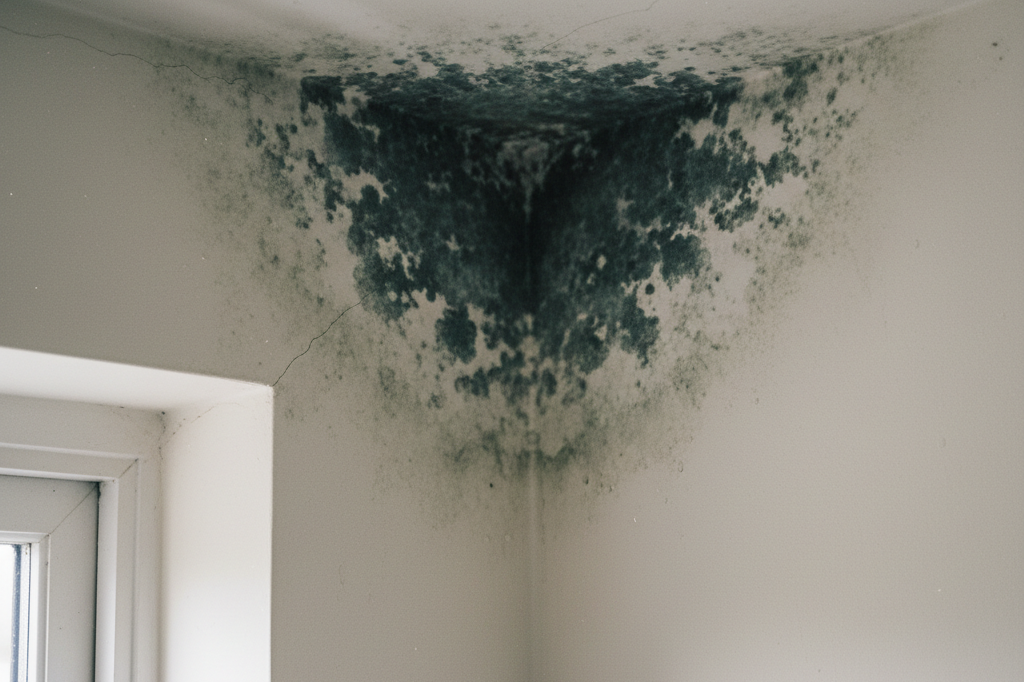
Take black mould seriously — but don’t panic
Black mould looks alarming, and the health concerns are real, particularly for children, older people and anyone with asthma or allergies. But it is also very treatable once you understand it: it is simply mould that has found a reliably damp, cold surface to live on. Remove the growth safely, take away the moisture, and it doesn’t come back.
Where we find it
The pattern is predictable across London homes — bathrooms and kitchens where steam can’t escape, bedroom corners on cold external walls, around windows, and on ceilings under roof or condensation problems. Wherever it is, the safe approach is the same: contain, filter, treat, and remove what can’t be salvaged.
Health first
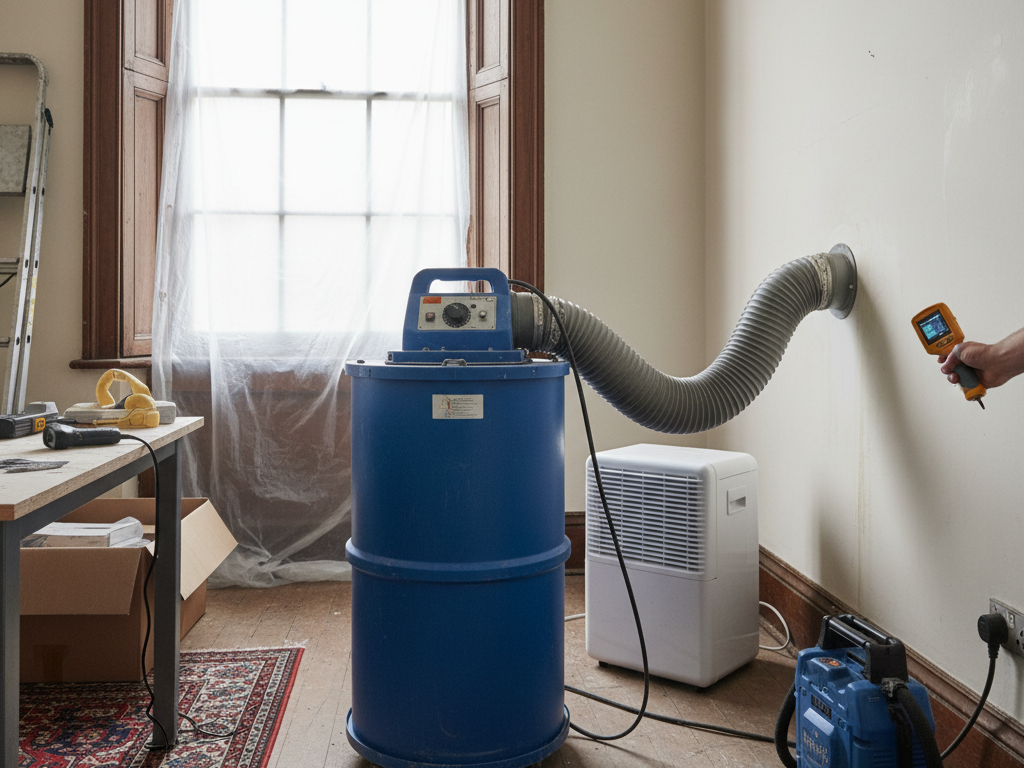
Because black mould is a health issue, our priority is to remove it without spreading spores through the rest of your home. That means proper containment and HEPA filtration as standard — see mould removal & remediation for how the controlled process works — followed by fixing the damp and ventilation that let it take hold.
Common situations we deal with
Bathroom & kitchen mould
Black spotting on sealant, grout and ceilings where steam and humidity have nowhere to escape — the most common call we get.
Bedroom corners & walls
Cold external corners and the wall behind a wardrobe or bed are classic black-mould spots, driven by condensation.
Around windows
Single-glazed sash windows and cold reveals collect condensation, feeding mould along the frame and into the plaster.
Ceilings & lofts
Roof leaks or cold-bridge condensation can leave black mould spreading across a ceiling from above.
Methodical, contained, evidence-led
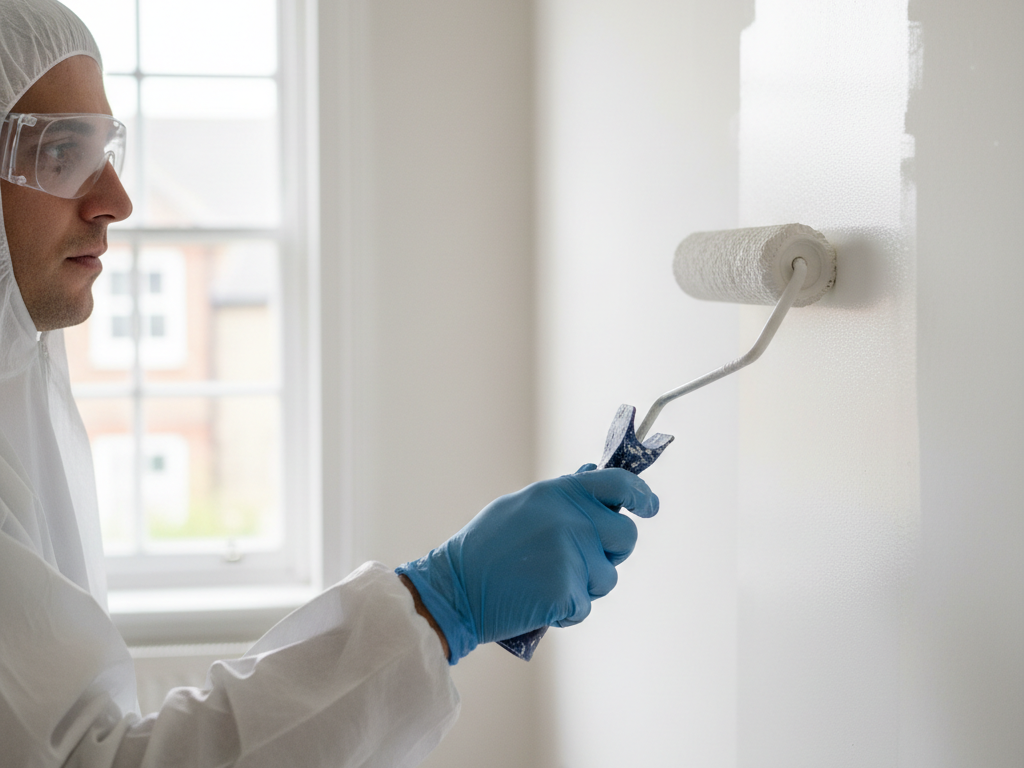
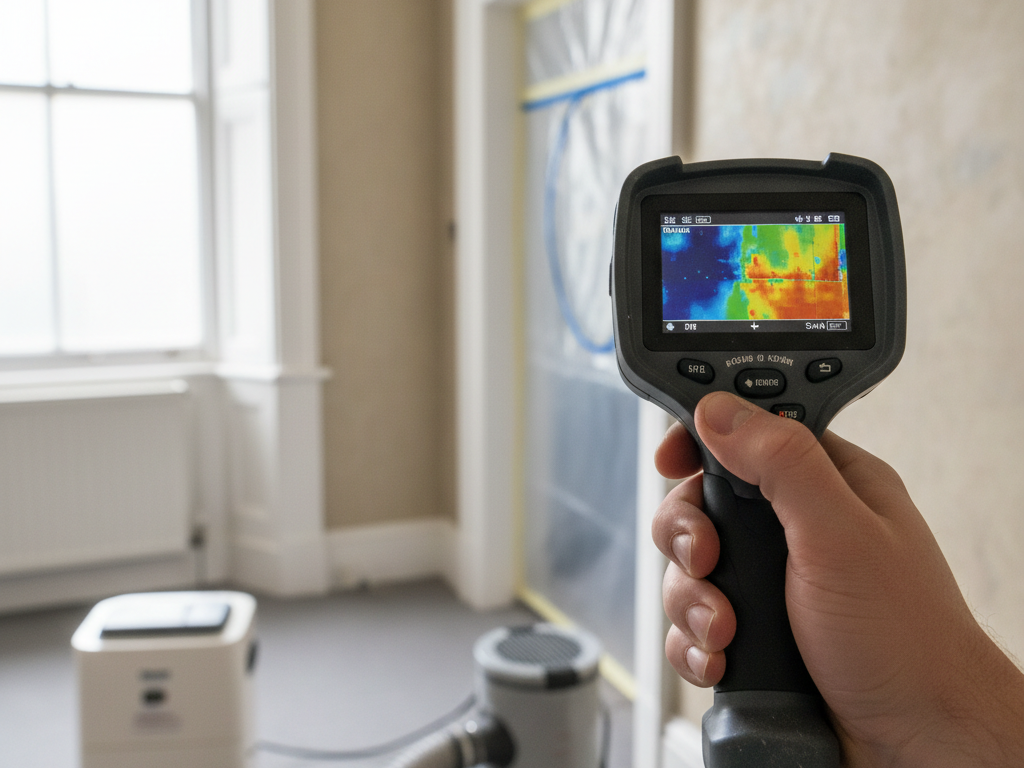
The work is done in a controlled sequence — diagnosed, contained, treated and protected — not rushed with a sponge and a tin of paint.
How the work is done
Assess the risk
We check how far it has spread and whether anyone in the property is vulnerable, so the work is scaled appropriately.
Contain & protect
The area is sealed and HEPA-filtered before any disturbance, protecting the rest of the home from spores.
Treat & remove
Surfaces are treated with biocidal antimicrobials; badly affected porous materials are removed and replaced rather than wiped.
Prevent recurrence
We address the damp source and improve ventilation so the conditions black mould needs are no longer there.
Frequently asked questions
Is black mould dangerous?
Black mould (often Stachybotrys) is associated with respiratory irritation, allergic reactions and worsening of asthma — and the risk is higher for infants, the elderly and anyone with a chest condition. It should be removed properly rather than left or simply painted over. Following the UK's Awaab's Law, landlords now face strict timescales for dealing with damp and mould in rented homes.
Can I just clean black mould myself with bleach?
For a very small patch on a non-porous surface you can clean it, but bleach mainly removes the colour and adds moisture — it doesn't reliably kill growth rooted in plaster or sealant, and disturbing it spreads spores. Anything recurring or widespread should be treated professionally.
Why does it keep coming back after I clean it?
Because the moisture that feeds it is still there. Black mould returns to the same cold, damp spots until the condensation, leak or ventilation problem is resolved. That's the part we fix.
I'm a tenant with black mould — what are my rights?
Under Awaab's Law, social landlords must investigate and address damp and mould hazards within set timescales, and the rules are tightening across the rented sector. An independent written assessment from our survey can support your case with a landlord or managing agent.
Tell us about the problem
Send a few details and we’ll come back within a working day — with advice, or a date for a free survey. Photographs of the affected areas always help us give you a sense of what’s involved.
- → We find and fix the cause, not just the symptom
- → Safe, contained, IICRC S520 process
- → Across London and the Home Counties
Request a survey
Just the basics — we’ll handle the rest.