Mould Survey & Assessment in London
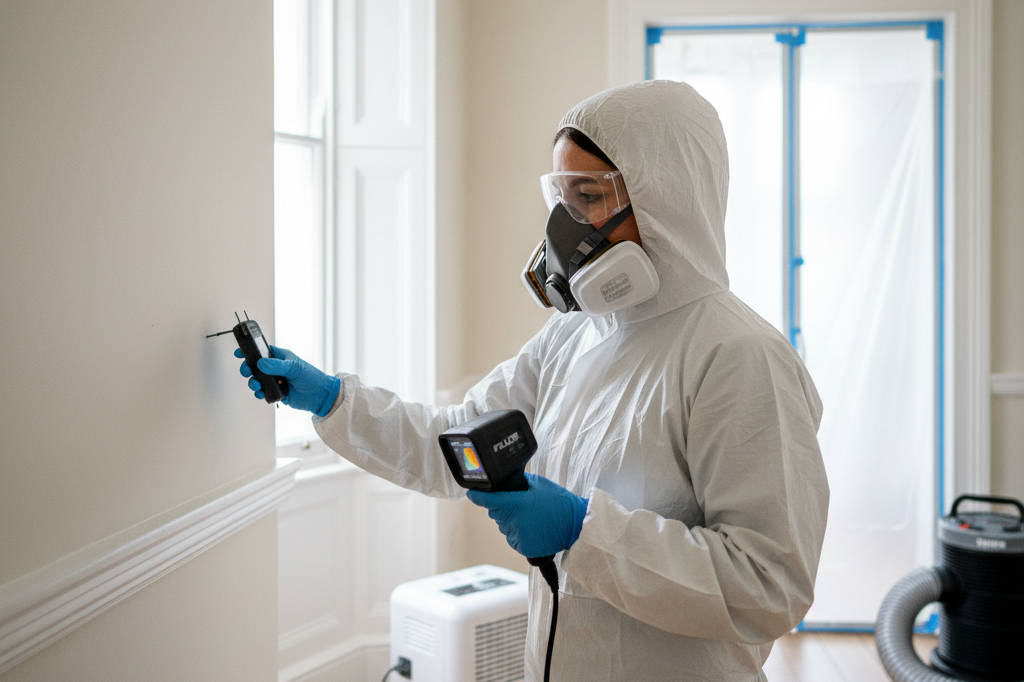
Before anything gets cleaned, we find the full extent of the problem and what is causing it. A proper survey uses thermal imaging, moisture readings and — where needed — air sampling, so remediation is targeted rather than cosmetic.
Why every job starts with a survey
Most mould problems are not really a mould problem — they are a moisture problem with mould as the symptom. Clean the symptom and leave the moisture, and it comes straight back. A survey exists to find the moisture, measure the damage, and make sure the work that follows is the right work.
We assess mould in homes, flats and commercial premises across London, with particular experience in the city’s Victorian and Edwardian properties, where solid walls, original sash windows and later modifications create predictable cold spots and trapped damp.
What we look at
- Visible growth — type, spread and surface affected (plaster, paint, sealant, timber, soft furnishings).
- Moisture readings — pin and pad meter readings across walls, floors and reveals to find where water sits.
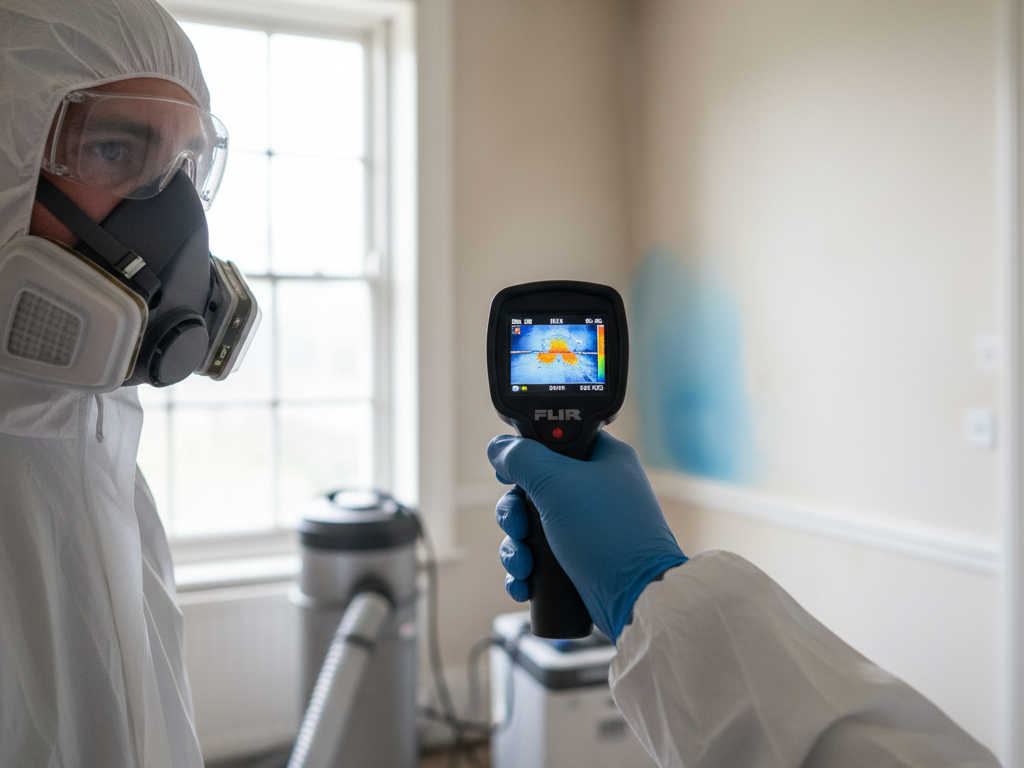
- Thermal imaging — a camera that reveals cold, damp areas behind the surface that the eye cannot see.
- Ventilation and humidity — extract fans, trickle vents, relative humidity and how the property is heated and used.
- The likely source — condensation, penetrating damp, rising damp, a leak, or a combination.
What you get
A clear written report you can act on — or hand to a landlord, buyer or managing agent. It covers the cause, the extent, the recommended remediation to IICRC S520 standards, and a transparent price. There is no obligation to book the work with us.
Common situations we deal with
Mould that keeps coming back
Surface cleaning a patch that returns within weeks is the classic sign of an unresolved moisture source. A survey finds the cause.
Damp you can smell but not see
A musty smell with no obvious patch usually means hidden moisture behind plaster, skirting or units — thermal imaging reveals it.
A purchase or rental dispute
Buyers, landlords and tenants often need an independent written assessment of the cause and extent before deciding who fixes what.
Health concerns at home
If anyone in the property has a respiratory condition, air sampling quantifies the spore load so you know how serious it is.
Methodical, contained, evidence-led
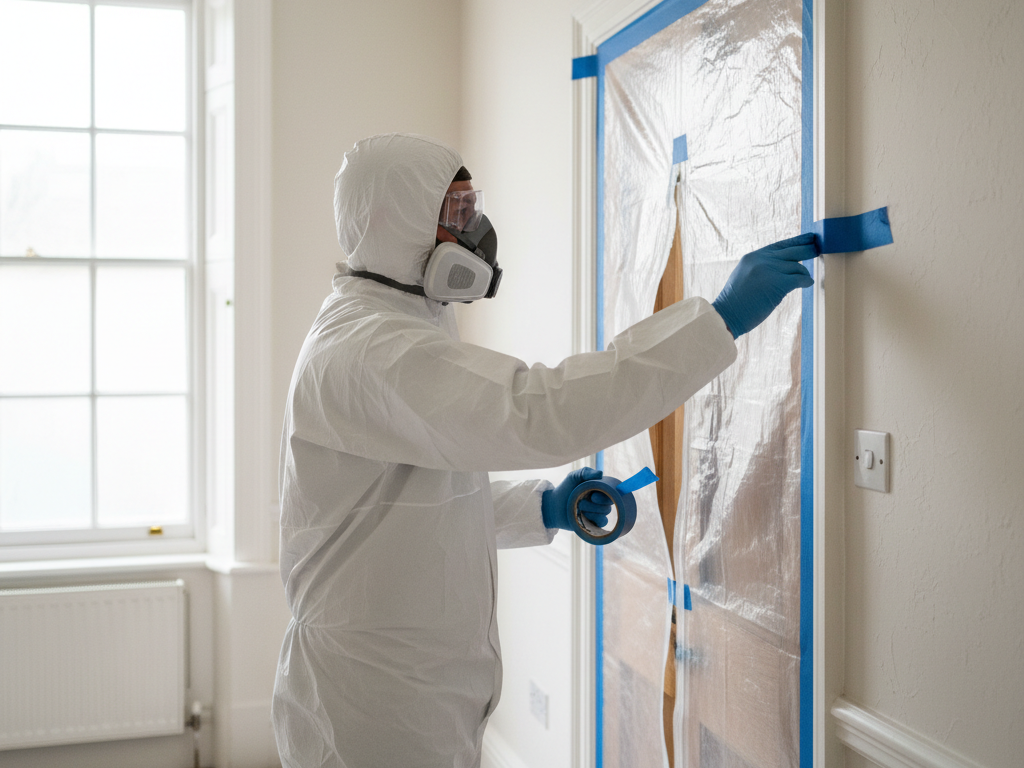
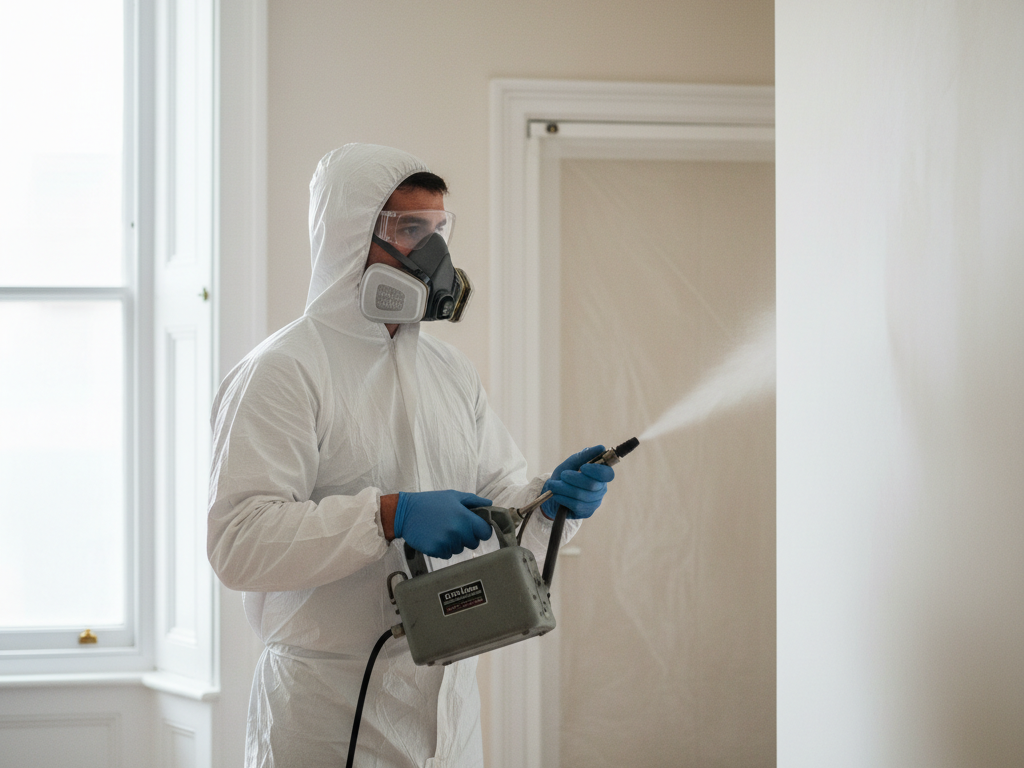
The work is done in a controlled sequence — diagnosed, contained, treated and protected — not rushed with a sponge and a tin of paint.
How the work is done
Walk-through
We inspect every room, looking at the known patches and the places mould hides — cold corners, behind furniture, window reveals and bathrooms.
Measure
Pin and pad moisture meters plus a thermal-imaging camera map where moisture sits and how far it travels through the structure.
Test the air
Where it matters, we take air and surface samples to identify the mould type and measure spore concentration against the outdoor baseline.
Written report
You get a plain-English report: what we found, the likely cause, and a costed plan to put it right — with no obligation to proceed.
Frequently asked questions
Do I need a survey, or can you just remove the mould?
For a small, obvious patch with a known cause we can often treat it directly. For recurring, widespread or smell-only mould, a survey saves money — it stops you paying to clean the same wall twice because the real cause was never found.
What is moisture mapping?
We use calibrated moisture meters and a thermal-imaging camera to trace where water is sitting in the walls and floors, and how far it has spread beyond the visible mould. It turns guesswork into a clear picture.
Will you tell me the cause even if it isn't your work to fix?
Yes. If the cause is a leaking gutter, failed pointing or a plumbing fault, the report says so. We would rather you fix the root cause than book remediation that won't last.
How long does a survey take?
A typical domestic survey takes one to two hours on site. If air sampling is involved, lab results usually follow within a few working days.
Tell us about the problem
Send a few details and we’ll come back within a working day — with advice, or a date for a free survey. Photographs of the affected areas always help us give you a sense of what’s involved.
- → We find and fix the cause, not just the symptom
- → Safe, contained, IICRC S520 process
- → Across London and the Home Counties
Request a survey
Just the basics — we’ll handle the rest.